Company NMLS 1777223 |  Personal NMLS 256707  |  CA-DRE 02075839

Blog

What’s Ahead For Mortgage Rates This Week – March 5th, 2018
Whats Ahead For Mortgage Rates This Week – March 5th 2018Last week’s economic releases included readings on new home sales, pending home sales and Case-Shiller Home Price Indices. Construction spending and consumer sentiment reports were also released, along with weekly readings on average mortgage rates and new jobless claims.

New Home Sales Drop in January

New home sales were reported at a seasonally-adjusted annual rate of 593,000 sales in January according to the Commerce Department. Analysts expected a rate of 693,000 sales based on December’s upwardly revised rate of 643,000 sales of new homes. January’s reading was 7.80 percent lower than for December; January’s reading was one percent lower than for January of 2017.

The average price of a new home was $323,000, which was 2.40 percent higher than for January 2017. The current supply of new homes for sale is 15 percent higher year-over-year, which is expected to ease low inventories of available homes.

Meanwhile, pending home sales were 4.70 percent lower in January than for December, which was unchanged as compared to November. Analysts said that sales activity, which is typically slow in January, was not likely a concern overall.

Case-Shiller Reports Higher Home Prices in December

Home prices were 6.30 percent higher year-over -year in December according to Case-Shiller’s 20-city home price index and were 0.60 percent higher month-to-month. The top three cities leading year-over-year home price growth were Seattle, Washington at 12.70 percent, Las Vegas, Nevada with 11.10 percent growth and San Francisco, California with 9.20 percent growth in home prices.  

None of the 20 cities in the index saw home prices fall in 2017 even after adjustments for inflation.

Construction spending was unchanged in January as compared to analyst estimates of 0.40 percent growth in spending. Builders cited concerns over higher materials prices and shortages of lots and skilled labor. Winter weather was also a factor in lower construction spending.

Mortgage Rates Rise New Jobless Claims Fall

Freddie Mac reported higher average rates for fixed rate mortgages last week; rates for 5/1 adjustable rate mortgages were lower on average. Mortgage rates for a 30-year fixed rate mortgage averaged three basis points higher at 4.43 percent. Rates for a 15-year fixed rate mortgage averaged 3.90 percent and were five basis points higher.

The average rate for a 5/1 mortgage was three basis points lower at 3.62 percent. Discount points averaged 0.50 percent for fixed rate mortgages and 0.40 percent for 5/1 adjustable rate mortgages. Mortgage rates rose for the eighth consecutive week, which caused concerns about affordability for first time and moderate-income home buyers. Combined effects of rapidly rising home prices and higher mortgage rates may sideline buyers.

New jobless claims fell by 10,000 to 210,000 first-time claims filed last week. Analysts expected 226,000 new claims based on the prior week’s reading of 220,000 new claims filed. In other news, the University of Michigan reported a lower reading for consumer sentiment in February with an index reading of 99.7 against an expected reading of 100.0 and January’s reading 0f 99.9.

Whats Ahead

This week’s scheduled economic news includes multiple readings from the labor sector along with weekly reports on mortgage rates and new jobless claims.
 

Can Your Waistline Be Affected By Your Kitchen Colors?

Have you ever walked into your kitchen and instantly felt hungry?Have you ever walked into your kitchen and instantly felt hungry?

Rarely do people think about the colors that they choose to paint their kitchens. They are often too busy worrying about whether the kitchen will match the rest of the home, or whether the colors will be satisfactory to the rest of the household.

However, as much as you might want to have a special color in your kitchen, your brain is very likely wired in a way to react in ways that you may not have intended! When painting and decorating your kitchen, you may want to think about the process in a way many people do not — how the colors you choose will affect the way in which you eat. 

Colors affect a lot of our subconscious thinking. As behavioral psychologists have documented, the presence of specific colors your the kitchen can change your eating habits and your cravings for food.

Here are some examples :

Red: The color red increases your appetite. This is why so many restaurants paint their walls red. Although associated with romance and passion, red is also a color which promotes hunger. Furthermore, it has been noted that the color red in your kitchen can influence high blood pressure.

Orange: The color orange is a “stimulating” color; increasing oxygen supply to the brain and providing a mental boost. An orange-themed kitchen may stimulate your appetite, therefore, and make over-eating more likely.

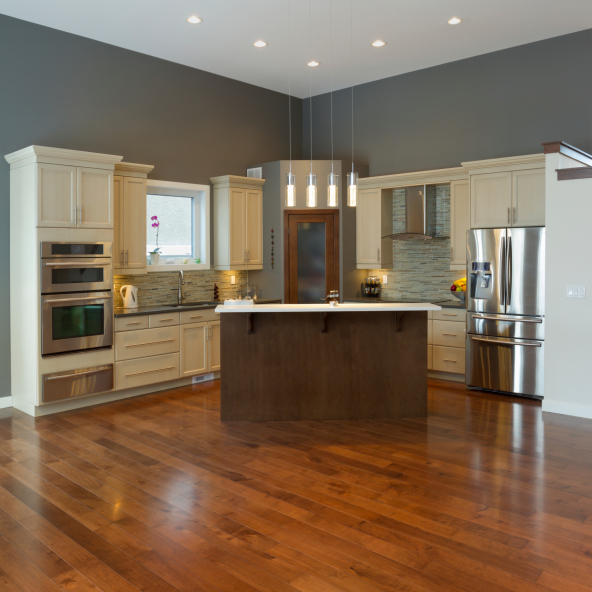
Gray: Gray can be an ideal appetite-suppressing color for your kitchen. This is because, psychologically, gray is calming and relaxing, and it neutralizes anxiety. Gray can arrest binge eating and impulsive snacking. It’s also a color which home stagers recommend for its neutrality.

Blue: The color blue is calming, which can slow your eating speed, and prevent you from over-eating. When decorating your kitchen and dining room, therefore, using blue wallpaper or blue paint; and blue placemats, for example, can result in “slower” eating and fewer feelings of fullness.

And there’s more about blue! There are very few foods that are naturally blue outside of blueberries and some varieties of potatoes. So over time your subconscious mind has trained itself to be wary of any food that is blue. Some weight loss programs suggest eating on a blue plate and even putting a blue light in your refrigerator!

So if you’re concerned about the amount you or your family is eating, painting your kitchen blue may very well help curb the appetite.

Whether you’re a home buyer, a home seller, or just getting ready to remodel, consider the influence of colors in your home. They do more than just “match the next room” — they affect your food and drink cravings as well.

Should You Get Pre-Qualified Or Pre-Approved For Your New Home Purchase?

How Pre-Qualifying Helps You Find The Right New HomeOften times, home buyers can be disappointed when they find their dream home only to discover they are not able to get a mortgage to purchase the property. There are methods that potential buyers can use to ensure this does not happen to them.

One of the options is to ensure you obtain a pre-qualification from your lender. It is important to understand the difference between a pre-approval and a pre-qualification. While both are helpful, they do not carry the same weight.

What are the differences between these options?

A pre-qualification allows a borrower to determine how much money they may be able to borrow. For most borrowers, this allows them to start the house-hunting process with a mortgage amount in mind. Borrowers should understand, while the loan amount can be calculated, changes in interest rate as well as the borrowers credit are not evaluated in this process.

In general, the lender will request specific information from the borrower including income and expenses as well as ask about their credit. None of this information is typically verified by the lender through an underwriting process before sending a pre-qualification letter.

On the other hand, a pre-approval requires the borrower to provide a number of documents to the lender, typically the same documents borrowers need to apply for a loan. The documentation supplied to the loan professional is then treated as a full purchase loan application and run through underwriting to secure a conditional commitment from a bank or mortgage lender.

Oftentimes, this difference between the two options leads borrowers to speculate as to whether a pre-qualification is useful.

Why pre-qualification helps in your home hunting?

There are many valid reasons why potential homebuyers should ask about pre-qualifying for their mortgage. Some of these include:

  • Home prices – if a borrower is eligible for a mortgage of $200,000 they will know they will have to seek homes in a specific price range. If a borrower is only able to put down 10 percent, they know the maximum home price they can afford is $220,000.
  • Down payments – in most cases, borrowers who can afford to put down a large down payment will have more options available to them. In some cases, understanding how much mortgage a borrower may qualify for beforehand allows them to save additional money for a down payment.
  • Estimates of dollars needed – another advantage to pre-qualifying is borrowers can get an idea of what additional closing costs they may need to qualify for a mortgage. This can be very helpful for a first time home buyer.

Pre-qualifying for a loan can save a home buyer from being disappointed. There are few things that are more upsetting than finding a home you love only to discover you are not eligible for the loan you need in order to purchase that home.

Typically, when you are seriously looking for your next home it would be a good idea to move to the full pre-approval process in order to get the most leverage when you find the home of your dreams.

As always, it’s a good idea to consult with your trusted mortgage professional for both loan pre-qualification as well as pre-approval.