

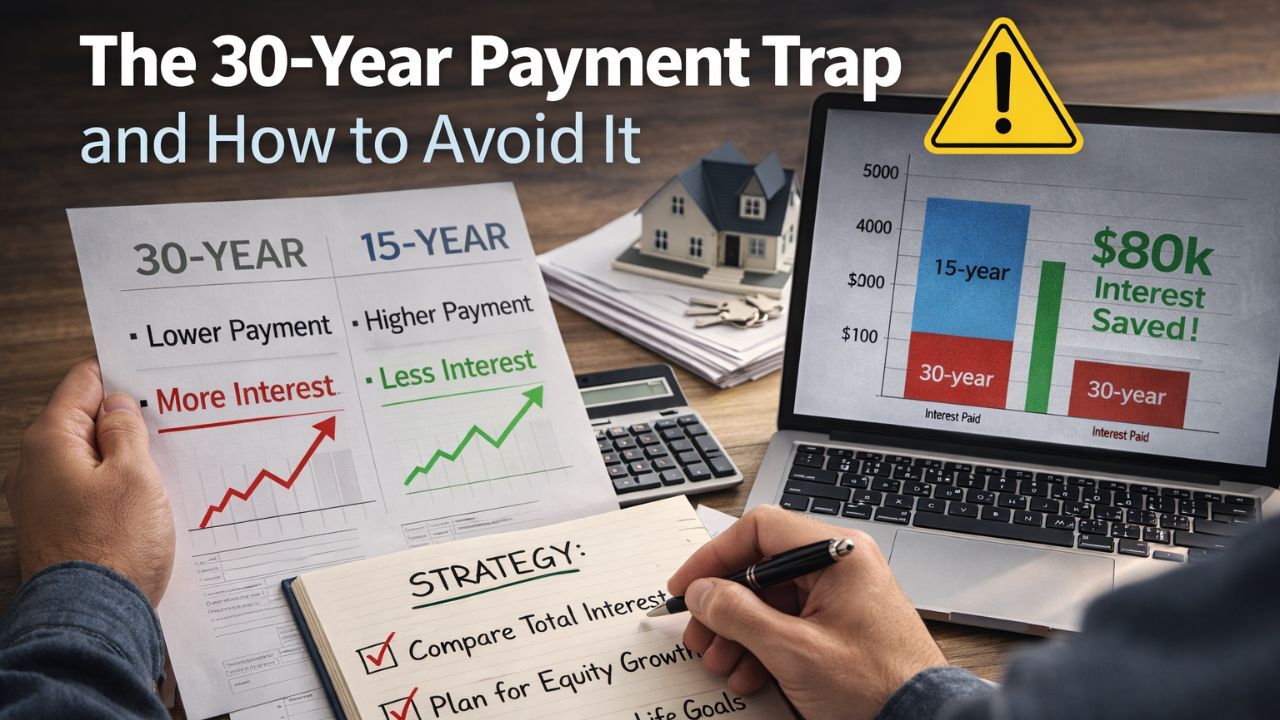
 Many buyers focus almost entirely on whether they can qualify for a mortgage. Qualification, however, is not the same as sustainability. A 30-year loan may offer lower monthly payments, but that does not automatically make it the best long-term strategy.
Mortgage structure determines how much interest you pay, how quickly you build equity, and how flexible you remain during life changes. Understanding the tradeoffs prevents buyers from falling into what can feel like a comfortable but costly pattern.
Lower Payments Can Create Complacency
A longer loan term spreads principal over more years, reducing the required monthly amount. While this increases short-term affordability, it also extends interest exposure. Many borrowers assume they will refinance or pay extra later, but without a structured plan, that intention rarely becomes reality. The result is decades of higher interest expense.
Equity Growth Is a Strategic Lever
Shorter loan terms or consistent principal reductions accelerate equity growth. Faster equity creation increases financial stability and opens future options, such as refinancing flexibility or leveraging value for other goals. Mortgage professionals should encourage buyers to evaluate total interest paid, not just monthly obligation.
Match the Term to the Life Plan
Borrowers should ask themselves practical questions. How long do I realistically plan to stay? Is income likely to increase? Do I value lower required payments for flexibility, or do I prefer disciplined principal reduction? There is no universal answer, but there should always be a deliberate strategy.
A mortgage should be structured intentionally, not passively accepted. Choosing the right term can protect long-term wealth and reduce unnecessary interest exposure. Give us a call to explore your mortgage options.
